Sport and injury risk Archives - Opus Biological
What the Women’s Euros Teach Us: Lionesses Win, But There’s More to Learn About Injury in the Women’s Game

What the Women’s Euros Teach Us: Lionesses Win, But There’s More to Learn About Injury in the Women’s Game

On Sunday 27 July 2025, England’s Lionesses retained their European crown in thrilling fashion, defeating Spain 3–1 on penalties after a tense 1–1 draw at St. Jakob‑Park in Basel. It was a performance defined by resilience, tactical adaptability, and mental steel.

But while England’s back-to-back UEFA Women’s Euro victories rightly dominate the headlines, an equally important story unfolds. The growing need to address sex-specific injury risks in female footballers, especially as the women’s game continues its rapid ascent.

England’s Comeback Queens

Despite trailing 0–1 at half-time, England mounted a spirited second-half comeback, sparked by substitute Chloe Kelly, who delivered the cross for Alessia Russo’s 57th‑minute equaliser. With no goals in extra time, the match moved to penalties, where Kelly once again became a national hero, burying the final spot-kick and sealing England’s first major title won abroad.

  • “They know how to win, they had proven it before, and that was all they needed to turn to in the toughest moments.” – BBC Sport

https://www.bbc.co.uk/sport/football

Statistically, the Lionesses defied the odds throughout Euro 2025: https://www.uefa.com/womenseuro/statistics/

  • Came from behind in all three knockout matches
  • Had 10 goal involvements from substitutes, a tournament record
  • Became the first team to win the final after trailing at half-time

But resilience often comes at a price. Particularly when it comes to the physical toll on players’ bodies.

The Injury Disparity Between Male and Female Footballers

One of the starkest issues in elite women’s football is the prevalence of non‑contact injuries, especially anterior cruciate ligament (ACL) tears. Women are estimated to be 6–8 times more likely than men to suffer ACL injuries in football due to anatomical, hormonal and biomechanical factors.

A 2021 study published in the British Journal of Sports Medicine observed that: https://bjsm.bmj.com/content/55/3/135

  • “Female athletes demonstrate altered landing mechanics, greater valgus knee angles, and hormonal fluctuations that increase ligament laxity, particularly during ovulation.”

And this isn’t just theory. Lucy Bronze reportedly played the entire tournament with a stress fracture, while multiple squads have quietly battled ongoing muscular and ligament injuries that disproportionately affect women at this elite level.

Why Women Need Tailored Sports Medicine

Despite progress, many training regimes remain based on male physiology. They often overlook the complexities of the female athlete’s endocrine system, injury profile and recovery curve.

Research, including the 2024 UEFA Women’s Health Report https://www.uefa.com/insideuefa/news/0278-15ea58b9fdd7-c84169b43d5e-1000–women-s-football-and-health-report-2024/, emphasises the urgent need to adapt everything from pre‑season screening and load management to menstrual‑cycle tracking and neuromuscular conditioning for ACL prevention. Yet only a minority of professional clubs have fully integrated female-specific health monitoring into their high-performance frameworks.

We believe this must change. At Opus we are proud to lead that transformation.

Regenerative Therapies and Prevention at Opus

To meet the needs of today’s elite female athletes, Opus offers a holistic blend of sports medicine and rehabilitation:

Service  Description
Sports Medicine Expert prevention, diagnosis and rehab tailored to musculoskeletal injuries and performance optimisation.
Regenerative Medicine Including allogeneic umbilical cord-derived mesenchymal stem cell therapy and platelet-rich plasma (PRP) injections, integrated with bespoke rehab programmes.
Reformer Pilates For core stability, neuromuscular control and injury prevention.
ACL Prevention Programmes Dedicated protocols to reduce ACL risk via targeted neuromuscular training.
Menstrual Cycle-Informed Training Protocols Tailored load management and timing based on hormonal cycles.

We treat athletes not just based on the injury, but on their unique physiological and hormonal context. This creates personalised pathways to longevity and peak performance.

Final Whistle: Lessons Beyond the Pitch

England’s Euro 2025 victory is a testament to elite preparation, adaptability and belief. But it also reminds us that women’s football is entering a new phase of professionalism. One that demands evolving our understanding of injury risk, prevention and care for female athletes.

As we celebrate the Lionesses’ glory, let’s also commit to building systems that keep women stronger, longer – on the pitch and beyond.

Want to Futureproof Your Athletic Health?

Whether you’re a professional athlete or striving for optimal performance, Opus offers the city’s most advanced destination for sports injury prevention and recovery. 

Whether you’re a professional athlete or striving for optimal performance, Opus offers the city’s most advanced destination for sports injury prevention and recovery. 

Book a consultation with Dr David Porter or our multi-disciplinary team today.

📍 Located in the heart of London
📞 Call us on [020 8609 7843]

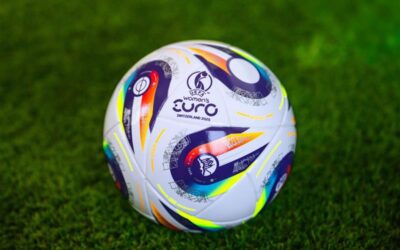
UEFA Women's Euro match ball on a grass pitch

Is there an increased injury risk to football players during the busy Christmas schedule?

Is there an increased injury risk to football players during the busy Christmas schedule?

It’s that time of year again where the managers at the top premier league clubs resent the hectic fixture list that’s thrown at them. Less time to prepare and to recover and as a result, a risk of a reduction in the quality of performance. However, is there also an added risk to the player’s well being? With a forced significant change in their pre and post match routines, are they at higher risk of injury?

If we take a look at one of those clubs affected in this manner, West Ham (European Champions and Premier League heavyweights), their fixture list over the next month consists of 10 games. A mix of league, Carabao cup, FA Cup and Europa League games make for an incredibly intense festive period. As a club that doesn’t have the same luxury, as say Man City, when it comes to squad size, and therefore the ability to rotate playing staff, there is a good chance you will see a very similar starting 11 in most of these games. The intensity of each of these games, the colder weather, the travel up and down the country and into Europe are all factors that can impact how a player feels and therefore performs on the pitch.

Julian, Page and Harper, 1, (2020) conducted a systematic review on the effects of fixture congestion on performance during male professional football matches and found that performance variables such as low and moderate intensity distances covered during the 90 mins reduces. They also suggest a possible reduction in tactical performance, with decreased synchronisation between the players.

Page et. al, 2, (2022) have then gone on to take a look at a direct correlation between fixture congestion and injury in professional male soccer. They state that overall injury risk is increased during matches completed within fixture-congested periods. This is further supported by findings from a substantial European competition review which shows an increase in hamstring and quadricep muscular injuries during periods of fixture congestion. 3. (Bengtsson et. al 2014)

This leads to a very valid point of discussion, that these findings could help provide a source of scientific evidence for governing bodies to elicit change  to support player welfare and develop a more sustainable match calendar that promotes a player’s career longevity.

In the meantime however, it will continue to be a period of time where coaching and medical staff will have to regularly review and adapt their training, pre and post match plans in order to keep injury risk at a minimum and performance levels as high as possible. Players may be required to take on a role of being more active in their own recovery away from the training ground. Nutrition plans being altered to suit the increased regularity of match days. The use of alternative therapies such as heat, ice and compression when at home and ensuring plenty of sleep and rest when the opportunity arises.

Reference List


  • Julian, R., Page, R.M. and Harper, L.D. (2020). The Effect of Fixture Congestion on Performance During Professional Male Soccer Match-Play: A Systematic Critical Review with Meta-Analysis. Sports Medicine, 51. doi:https://doi.org/10.1007/s40279-020-01359-9.
  • Page, R.M., Field, A., Langley, B., Harper, L.D. and Julian, R. (2022). The Effects of Fixture Congestion on Injury in Professional Male Soccer: A Systematic Review. Sports Medicine. doi:https://doi.org/10.1007/s40279-022-01799-5.

  • Bengtsson, H., Ekstrand, J., Waldén, M. and Hägglund, M. (2014). MUSCLE INJURY RATES IN PROFESSIONAL FOOTBALL INCREASE WITH FIXTURE CONGESTION: AN 11-YEAR FOLLOW-UP OF THE UEFA CHAMPIONS LEAGUE INJURY STUDY. British Journal of Sports Medicine, 48(7), pp.566.2-567. doi:https://doi.org/10.1136/bjsports-2014-093494.19.
marathon recovery guide

Are we finally seeing the necessary consistent respect towards reducing the risk of head injuries in Elite sport?

Are we finally seeing the necessary consistent respect towards reducing the risk of head injuries in Elite sport?

What a game. What a Rugby World cup. What a final performance from both the Springboks and Kiwis. But, as always when there is any form of controversy in a big match, we will ask the question. If New Zealand captain Sam Cane didn’t have his yellow card upgraded to a red card so early on in the contest would it have been the same outcome? The rugby fan in me would love to have seen 15 vs 15 for a full 80 mins of course. However, to witness the sense taken by the officials in making an example of what is a direct shoulder to head shot, on the biggest stage there is, was a great decision. We need to protect contact sport athletes around head and spinal injuries and I personally hope this particular event will help to amplify this.

Some fantastic research was done into the frequency and type of head injuries experienced at the 2019 rugby world cup. Across 45 matches, 68 head injuries occurred with just over half of these players being removed from the field of play (Cooke et al 2023). 1. It’s going to be fascinating to see if with the recent changes in approach to the treatment and discipline of head injury related incidents in this year’s tournament correlates to a significant statistical shift compared to 2019.

Thankfully there has been much change In recent years in both the medical management of head injuries in rugby union and also the disciplinary approach to offending players.

A huge contributing factor to the progression of management and increase in discipline towards head injuries has been driven by the recent cases of ex players receiving a diagnosis of dementia with probable chronic traumatic encephalopathy. A recent paper on ‘Football’s Influence on Lifelong health and Dementia risk (FIELD)’ found that ex-professional international rugby players had twice the risk of developing dementia in later life than compared to the general population (Russell et. al 2019)2.

From the medical side, there’s been much clearer guidelines set out on the in play decision making on concussion and also on the return to play protocol. The emphasis on both the ‘recognise and remove’ principle and ‘Graduated return to Activity and Sport (GRAS) programme’ are highlighted in the HEADCASE extended guidelines posted by the RFU. 3.

Hopefully, the sensible refereeing decision made in last weekend’s final will have had a suitable impact on all those involved in the coaching and playing of rugby union. Understanding the importance of trying to abide by the safe tackling laws of the game, should correlate to us seeing less cases of longer term head injury consequences in competitors of the sport.

Opus Biological logo