Health Screening Archives - opusbiological.com
Why Rehabilitation Should Focus on Long-Term Health Management, Not Quick Fixes

Why Rehabilitation Should Focus on Long-Term Health Management, Not Quick Fixes

By Ian Gilham, BSc (Hons) MCSP, Lead Physiotherapist at Opus Biological 

 Most rehabilitation follows a familiar pattern. Symptoms settle, you are discharged, and you return to exactly what you were doing before. Six months later, the problem is back.

The issue is rarely the treatment itself. It is the goal. When the only target is to reduce pain and return to function, you are aiming too low – and setting yourself up to repeat the cycle.

At Opus, we take a different approach. We believe rehabilitation should leave you in a better physical state than you were in before your injury, not simply restore you to baseline.

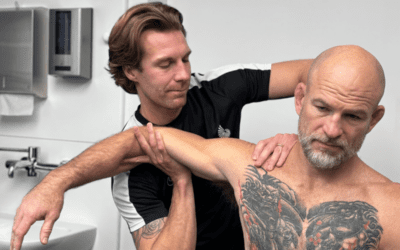
Physiotherapist supporting a shirtless male patient’s arm and shoulder during a mobility assessment in a clinical treatment room, with the patient showing a large chest tattoo.

What does long-term rehabilitation actually look like?

Effective rehabilitation is a learning process, not just a recovery from one. Done properly, it gives patients the understanding, habits and physical foundation to manage their own bodies well beyond the point of discharge.

That means going further than exercises and appointments. It means addressing every factor that influences how the body heals, adapts and performs.

Sleep

Poor sleep slows tissue repair, increases pain sensitivity and undermines motivation. Optimising sleep quality is one of the most impactful things a patient can do during rehabilitation – and one of the most overlooked.

Nutrition and hydration

The body cannot rebuild effectively without the right fuel. Adequate protein intake, hydration and micronutrient balance all play a direct role in recovery timelines and outcomes.

Load management

Returning to activity too quickly, or too cautiously, can both cause setbacks. Sensible load management means matching your activity levels to your current capacity and progressing in a structured way that your body can adapt to.

Minimising aggravating factors

Understanding what makes your condition worse – and what eases it – puts you in control. This kind of patient education is central to preventing recurrence and building confidence in your own body.

Why does conventional rehabilitation fall short?

Traditional rehabilitation models tend to focus on the immediate problem: reduce inflammation, restore range of motion, strengthen the affected area. These are important steps, but they rarely address the broader picture.

A patient who recovers from a knee injury but returns to poor movement patterns, inadequate strength and conditioning, disrupted sleep and a sedentary lifestyle outside of training is likely to re-present within months – sometimes with a different injury altogether.

The goal should not be to create dependency on appointments. It should be to give people the tools, confidence and understanding to take long-term ownership of their physical health.

What patients should aim for after rehabilitation

When rehabilitation is completed and guided properly, patients should leave with:

A sustainable strength and conditioning routine. Not a sheet of exercises that gathers dust, but a programme that fits realistically into your life and supports the way you move day to day.

Cardiovascular fitness matched to your goals. Whether you run, cycle, swim or simply want to stay active as you age, your aerobic capacity matters for recovery and long-term health.

Sensible load management for your activity level. Knowing how to progress training, when to pull back, and how to recognise the difference between productive discomfort and a warning sign.

Active recovery habits you actually stick to. Mobility work, rest days, sleep hygiene – the things that are easy to skip but make the biggest difference over time.

How Opus approaches rehabilitation differently

At Opus, physiotherapy is not delivered in isolation. Our clinicians work as part of a multidisciplinary team that includes sports medicine, Reformer Pilates, nutrition, performance psychology and body optimisation – all under one roof in Marylebone.

This means your rehabilitation plan can address not just the injury, but the lifestyle factors that contributed to it. Your physiotherapist coordinates with colleagues across disciplines to ensure nothing is missed – from movement quality and strength to stress, sleep and nutrition.

The result is a patient who does not just recover, but recovers and stays recovered.

When should you consider this approach?

Long-term rehabilitation planning is particularly valuable if:

  • You have experienced the same injury or pain more than once
  • You have been discharged from physiotherapy before but symptoms returned
  • You want to return to sport or high-level activity after a significant injury
  • You are looking to invest in preventative care rather than waiting for the next problem
  • You want a structured, expert-led plan that goes beyond the basics

Take the next step

 If you are interested in a rehabilitation approach that prioritises long-term health management, book an appointment with our physiotherapy team. We will carry out a thorough assessment and build a plan that works with your goals, your lifestyle and your body.

Ian Gilham is Lead Physiotherapist at Opus Biological, a multidisciplinary sports medicine and performance health clinic in Marylebone, London.

Why should rehab focus on long-term health management rather than quick fixes?

Because short-term symptom relief without addressing underlying causes – such as poor movement patterns, inadequate strength, disrupted sleep or lifestyle factors – often leads to re-injury. Long-term rehabilitation builds patient ownership, sustainable habits and lasting physical resilience.

How long should rehabilitation last?

This depends on the individual and the injury. At Opus, rehabilitation is guided by objective progress markers rather than arbitrary timelines. The aim is to discharge patients when they have the tools and confidence to manage independently – not simply when symptoms subside.

What is the difference between physiotherapy and long-term rehabilitation?

Physiotherapy is a core component of rehabilitation, but long-term rehab takes a broader view. It integrates strength and conditioning, load management, nutrition, sleep optimisation and lifestyle education alongside hands-on treatment.

The New Luxury: Why Recovery Is the Ultimate Status Symbol

The New Luxury: Why Recovery Is the Ultimate Status Symbol

Recovery has quietly become the ultimate luxury.


Forget facials and fasting; the new benchmark of wellness is how well your body performs under pressure, and how quickly it bounces back.

In London, that matters more than ever. The city rewards pace: early starts, late finishes, full diaries, flights, training blocks, social commitments, often all in the same week. For high-performing Londoners, the question isn’t whether you can push harder. It’s whether your body can keep up, consistently, without breaking down.

That’s why recovery has stepped out of the “nice to have” category and into something far more valuable: a competitive advantage.

The end of wellness theatre

For years, luxury wellness was dominated by optics. The right studio. The right kit. The right rituals. And while many trends have their place, London’s most switched-on performers are increasingly interested in something less performative and more practical: how they move, how they adapt, and how long they can keep doing what they love, pain free.

Because real health doesn’t announce itself on social media. It shows up when you’re running late, travelling, training, presenting, parenting, and your body still functions properly.

In 2026, that’s the flex.

Recovery is no longer passive

The old idea of recovery was rest. The new idea is systems.

Recovery today is structured, clinically informed and specific to the individual. It means understanding your injury risk, your biomechanics, your training load and your blind spots, then building a plan that protects performance now and preserves longevity later.

That shift has driven growing demand for sports medicine in London, not only for people with injuries, but for people who want to avoid them.

Why “performance medicine” is rising in the UK

The growth of performance medicine in the UK reflects a broader change in mindset: proactive care is replacing reactive treatment.

Performance medicine isn’t about chasing hacks. It’s about getting to the root cause of pain, limitation or underperformance, and fixing it properly.

It asks questions like:

  • Why does this keep flaring up?
  • What movement pattern is driving the problem?
  • Where is load exceeding tissue capacity?
  • How do we build strength and tolerance safely?

The result is not just symptom relief, but better output: improved efficiency, fewer setbacks and more consistent training.

There’s a reason luxury physiotherapy in London is having a moment, and it’s not because people suddenly love rehab.

It’s because time is expensive, and generic care wastes it.

Luxury, in a clinical context, means precision: senior expertise, proper assessment, longer appointments, tailored programming and measurable progression. It means your plan is built for your body and your life, not a standard template.

And for people who train hard, travel often, and operate under pressure, that level of care becomes essential.

At Opus, recovery is treated as part of a wider performance strategy. That might mean physiotherapy and rehabilitation, but it also includes movement analysis, load management, strength-based progression and (where clinically appropriate) regenerative approaches.

This is not “maintenance” as a luxury add-on. It’s maintenance as an operating system.

The real status symbol: longevity

London has never been short of people who can push. What’s rarer is the person who can keep pushing, year after year, without injury becoming the price of ambition.

Longevity is the new status symbol.

Not just living longer, but living better: training in your 40s, 50s and beyond; staying strong; staying mobile; staying capable. Being able to move through life without constant negotiation with pain.

That’s what recovery buys you.

The Opus approach: performance first

Opus is built for people who expect more from their bodies, and want to protect that investment. As a medically led clinic specialising in sports medicine London, physiotherapy, and performance medicine, we take a performance-first approach to movement, recovery and longevity.

We don’t do quick fixes. We build resilient systems.

Because the new luxury isn’t being able to stop.
It’s being able to continue, stronger, for longer.

What the Women’s Euros Teach Us: Lionesses Win, But There’s More to Learn About Injury in the Women’s Game

What the Women’s Euros Teach Us: Lionesses Win, But There’s More to Learn About Injury in the Women’s Game

On Sunday 27 July 2025, England’s Lionesses retained their European crown in thrilling fashion, defeating Spain 3–1 on penalties after a tense 1–1 draw at St. Jakob‑Park in Basel. It was a performance defined by resilience, tactical adaptability, and mental steel.

But while England’s back-to-back UEFA Women’s Euro victories rightly dominate the headlines, an equally important story unfolds. The growing need to address sex-specific injury risks in female footballers, especially as the women’s game continues its rapid ascent.

England’s Comeback Queens

Despite trailing 0–1 at half-time, England mounted a spirited second-half comeback, sparked by substitute Chloe Kelly, who delivered the cross for Alessia Russo’s 57th‑minute equaliser. With no goals in extra time, the match moved to penalties, where Kelly once again became a national hero, burying the final spot-kick and sealing England’s first major title won abroad.

  • “They know how to win, they had proven it before, and that was all they needed to turn to in the toughest moments.” – BBC Sport

https://www.bbc.co.uk/sport/football

Statistically, the Lionesses defied the odds throughout Euro 2025: https://www.uefa.com/womenseuro/statistics/

  • Came from behind in all three knockout matches
  • Had 10 goal involvements from substitutes, a tournament record
  • Became the first team to win the final after trailing at half-time

But resilience often comes at a price. Particularly when it comes to the physical toll on players’ bodies.

The Injury Disparity Between Male and Female Footballers

One of the starkest issues in elite women’s football is the prevalence of non‑contact injuries, especially anterior cruciate ligament (ACL) tears. Women are estimated to be 6–8 times more likely than men to suffer ACL injuries in football due to anatomical, hormonal and biomechanical factors.

A 2021 study published in the British Journal of Sports Medicine observed that: https://bjsm.bmj.com/content/55/3/135

  • “Female athletes demonstrate altered landing mechanics, greater valgus knee angles, and hormonal fluctuations that increase ligament laxity, particularly during ovulation.”

And this isn’t just theory. Lucy Bronze reportedly played the entire tournament with a stress fracture, while multiple squads have quietly battled ongoing muscular and ligament injuries that disproportionately affect women at this elite level.

Why Women Need Tailored Sports Medicine

Despite progress, many training regimes remain based on male physiology. They often overlook the complexities of the female athlete’s endocrine system, injury profile and recovery curve.

Research, including the 2024 UEFA Women’s Health Report https://www.uefa.com/insideuefa/news/0278-15ea58b9fdd7-c84169b43d5e-1000–women-s-football-and-health-report-2024/, emphasises the urgent need to adapt everything from pre‑season screening and load management to menstrual‑cycle tracking and neuromuscular conditioning for ACL prevention. Yet only a minority of professional clubs have fully integrated female-specific health monitoring into their high-performance frameworks.

We believe this must change. At Opus we are proud to lead that transformation.

Regenerative Therapies and Prevention at Opus

To meet the needs of today’s elite female athletes, Opus offers a holistic blend of sports medicine and rehabilitation:

Service  Description
Sports Medicine Expert prevention, diagnosis and rehab tailored to musculoskeletal injuries and performance optimisation.
Regenerative Medicine Including allogeneic umbilical cord-derived mesenchymal stem cell therapy and platelet-rich plasma (PRP) injections, integrated with bespoke rehab programmes.
Reformer Pilates For core stability, neuromuscular control and injury prevention.
ACL Prevention Programmes Dedicated protocols to reduce ACL risk via targeted neuromuscular training.
Menstrual Cycle-Informed Training Protocols Tailored load management and timing based on hormonal cycles.

We treat athletes not just based on the injury, but on their unique physiological and hormonal context. This creates personalised pathways to longevity and peak performance.

Final Whistle: Lessons Beyond the Pitch

England’s Euro 2025 victory is a testament to elite preparation, adaptability and belief. But it also reminds us that women’s football is entering a new phase of professionalism. One that demands evolving our understanding of injury risk, prevention and care for female athletes.

As we celebrate the Lionesses’ glory, let’s also commit to building systems that keep women stronger, longer – on the pitch and beyond.

Want to Futureproof Your Athletic Health?

Whether you’re a professional athlete or striving for optimal performance, Opus offers the city’s most advanced destination for sports injury prevention and recovery. 

Whether you’re a professional athlete or striving for optimal performance, Opus offers the city’s most advanced destination for sports injury prevention and recovery. 

Book a consultation with Dr David Porter or our multi-disciplinary team today.

📍 Located in the heart of London
📞 Call us on [020 8609 7843]