
Regenerative medicine
Platelet-rich plasma
An injection prepared from your own blood, used to treat osteoarthritis and tendon, muscle and ligament problems.
Platelet-rich plasma, or PRP, is a concentrate of platelets prepared from a sample of your own blood.
Platelets contain growth factors, including PDGF, TGF-β, VEGF and IGF-1, which are involved in inflammation, the formation of new blood vessels and tissue repair. A PRP injection delivers a high concentration of these factors directly to an injured tendon, ligament, muscle or arthritic joint.
Medically reviewed by Dr David Porter, sport and exercise medicine doctor. Last reviewed October 2026. Next review October 2027.
01
Assessment
A sports medicine doctor takes a history, examines the affected area and, in most cases, scans it with diagnostic ultrasound to confirm the diagnosis and identify the structure to be treated. The initial consultation lasts up to 45 minutes and costs £350, or £500 with an ultrasound scan.
PRP is most often considered for knee osteoarthritis; tennis and golfer’s elbow; patellar, Achilles and gluteal tendinopathy; plantar fasciopathy; and selected muscle and ligament injuries.
The evidence is strongest in knee osteoarthritis. NICE (2019) found no major safety concerns but described the evidence on efficacy as limited in quality. Read the published studies
02
Preparation
A blood sample is taken from a vein in the arm and spun in a centrifuge. Spinning separates the blood by density: red cells settle at the bottom, white cells and platelets form a thin layer above them, and plasma rises to the top. The platelet-rich fraction is drawn off for injection, in the same appointment.
Anti-inflammatory medicines reduce platelet function, so we will advise you which to stop beforehand.
03
Injection
The PRP is injected under real-time ultrasound guidance, so the doctor can see the needle reach the target: the joint space in osteoarthritis, or the affected part of the tendon in tendinopathy. A typical course is three injections over two to three weeks, at £900 per injection, or £950 combined with hyaluronic acid.
Soreness at the injection site for one to three days is common. Infection is rare.
04
Recovery
Tissue repair after PRP takes place over weeks. Around 36 hours of relative rest is followed by a progressive loading programme, usually with one of our physiotherapists, and a review once the course is complete.
Contact the clinic straight away if the area becomes increasingly painful, red and hot, or if you develop a fever.
Questions
Before you decide
Who should not have PRP?
PRP may not be suitable if you have an infection at or near the injection site, a low platelet count or a platelet disorder, active cancer, if you are pregnant, or if you have had a steroid injection into the same area in recent weeks. Anticoagulant medicines are reviewed before treatment.
What are the side effects?
Pain, swelling or stiffness at the injection site for one to three days is common and reflects the local inflammatory response. Bruising may occur. Infection is rare, and because PRP is made from your own blood, allergic reactions are very unlikely.
Which medicines should I stop?
Anti-inflammatory medicines such as ibuprofen and naproxen are usually stopped for a period before and after treatment. Your doctor will tell you which medicines to stop and for how long. Do not stop any prescribed medicine without checking with us first.
Does the injection hurt?
Most patients describe it as uncomfortable rather than painful.
What is PRP with hyaluronic acid?
In osteoarthritis, PRP can be combined with hyaluronic acid, a lubricating molecule that occurs naturally in joint fluid. Your doctor will advise whether the combination is appropriate. See hyaluronic acid injections.
Is PRP the same as stem cell treatment?
No. PRP is a platelet concentrate prepared from your blood during the appointment. Stem cell treatment is a separate, licensed treatment. See stem cell treatment.
Can I use my health insurance?
Cover for PRP varies between insurers and policies. Please check with your insurer before booking, and bring your membership details and a pre-authorisation code. Procedures are otherwise paid in advance. See the full price list.
When can I return to training?
After around 36 hours of relative rest, activity is reintroduced progressively according to your rehabilitation programme. Your doctor or physiotherapist will advise on timing for your sport.
References
- Platelet-rich plasma injections for knee osteoarthritis. National Institute for Health and Care Excellence, interventional procedures guidance IPG637, 2019.
- The use of platelet-rich plasma in symptomatic knee osteoarthritis. The Journal of Knee Surgery.
- The temporal effect of platelet-rich plasma on pain and physical function in the treatment of knee osteoarthritis. Journal of Orthopaedic Surgery and Research.
- Platelet-rich plasma: new performance understandings and therapeutic considerations in 2020. International Journal of Molecular Sciences.
- Intra-articular platelet-rich plasma injection for knee osteoarthritis: a summary of meta-analyses. Journal of Orthopaedic Surgery and Research.
Meet the team

Dr David Porter
MB BS DipESM MScSPORT & EXERCISE MEDICINE DOCTOR
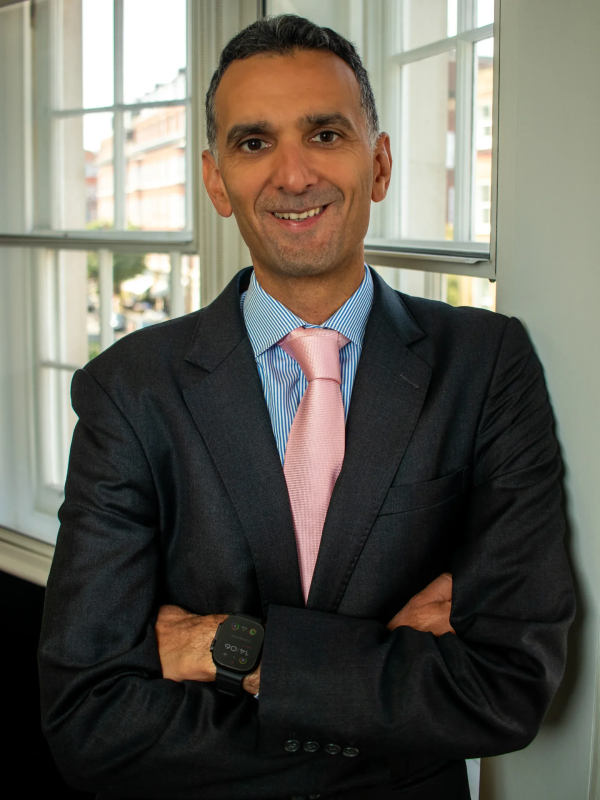
Dr Jonathan Korgaonkar
MBBS MRCP FFSEM Pgcert(US) BSc SPORTS MEDICINE DOCTOR

Dr Kush Joshi
MBBS, BSc, MRCP, FFSEM, PGDipSPORTS MEDICINE DOCTOR
Related
Related treatments
Questions about PRP?
If you would like to know whether PRP is suitable for you, send us a message and a member of our team will get back to you.
Prefer to talk? Call us on +44 20 8609 7843.