
Sports medicine can now track almost everything about an athlete. At the Sports Doctors Network summit at the Royal Institution, the harder question was which of those numbers should change what a clinician does.
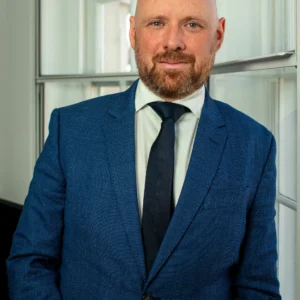 Written byDr David PorterFounding Director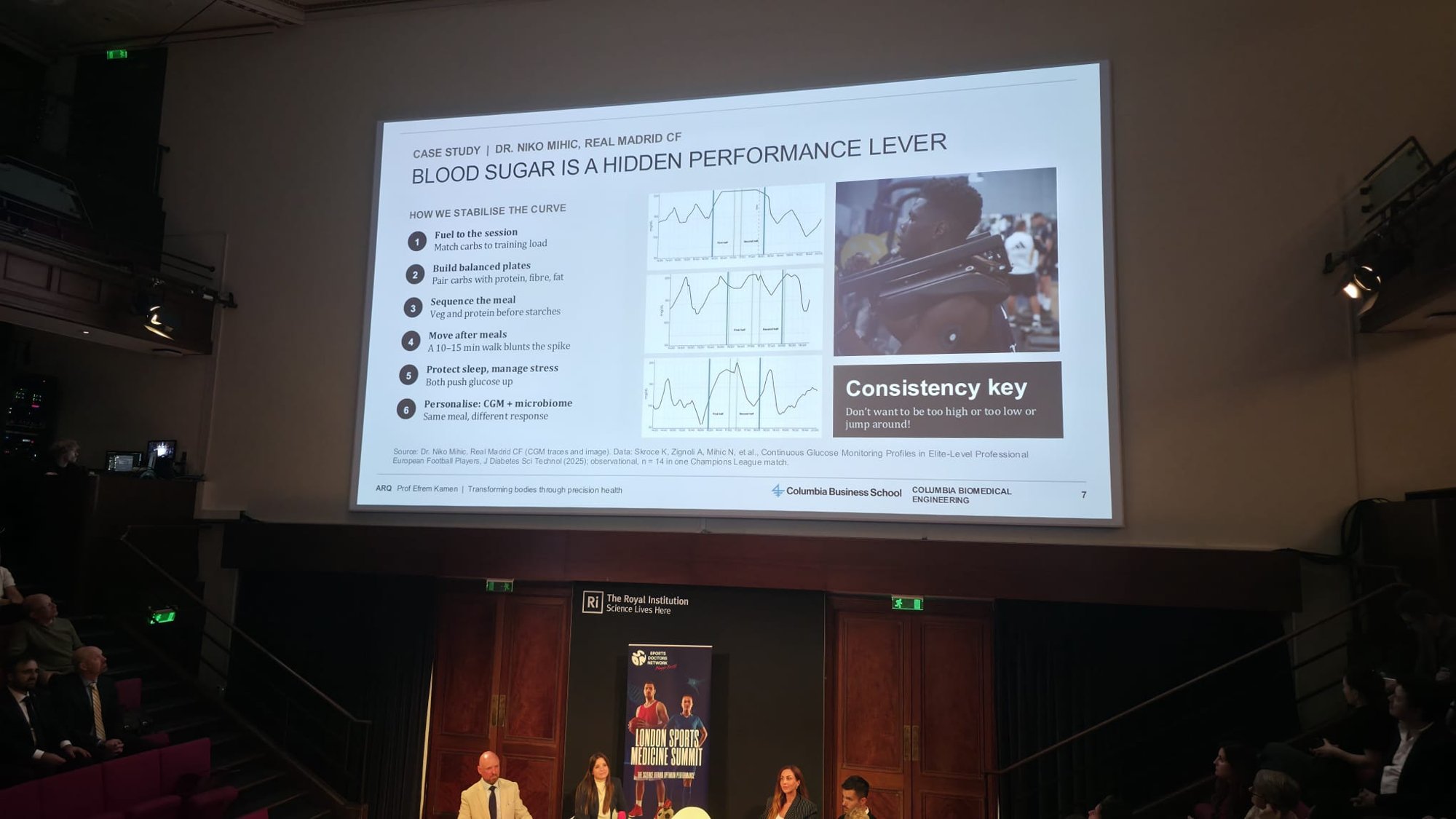
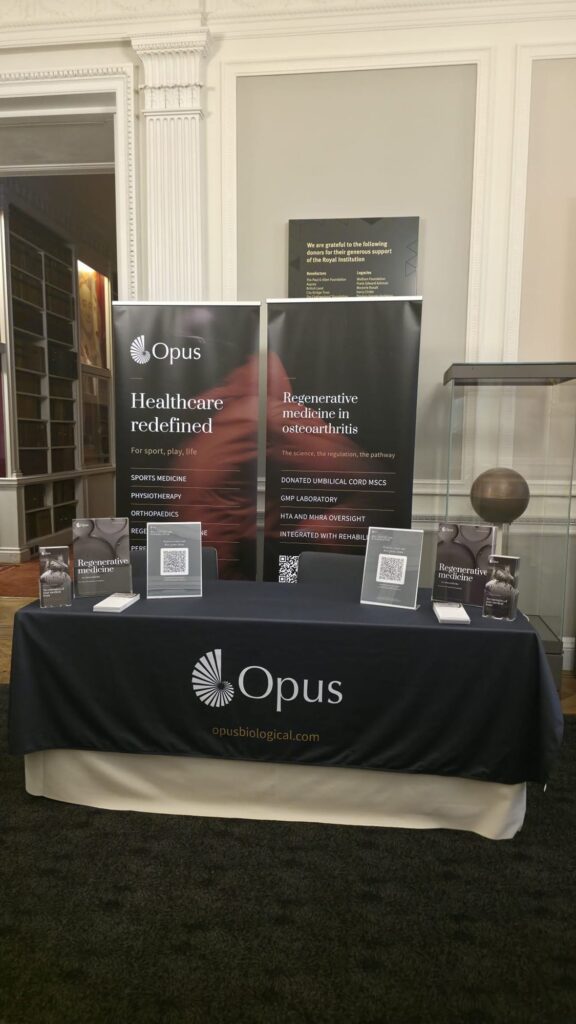
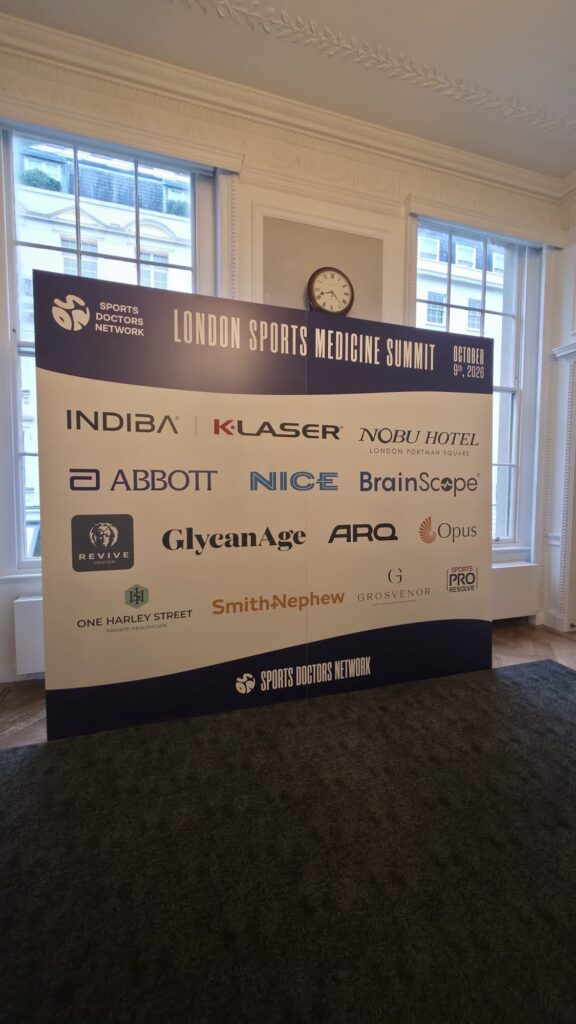
The London Sports Medicine Summit at the Royal Institution, 9 October 2026.
- A day built around one question
- AI and the individual athlete
- Concussion and return to play
- Nutrition and diagnostics
- If you’re not a professional athlete
A decade ago, the limiting factor in sports medicine was information. We had too little of it, and we gathered it too slowly. That has changed. Wearables track sleep and heart rate variability overnight. Blood panels arrive within hours. AI models can scan thousands of athletes for patterns no clinician would spot by eye. The limit now is judgement. Knowing which result matters, which can wait, and which should be ignored is the skill that separates good care from busy care.
That was the thread through the London Sports Medicine Summit on Friday 9 October. Sports Doctors Network brought together doctors, scientists and practitioners from elite and professional sport at the Royal Institution. I hosted one of the day’s six panels and spent the rest of it listening.
A day built around one question
HRH The Princess Royal opened the summit. In her address she put clinical experience, close observation and sport-specific knowledge at the centre of athlete care. Every session after that returned to her point in some form. The programme covered new technology, women’s health in sport, nutrition and diagnostics, traumatic brain injury, rehabilitation and return to performance, and muscle and bone stress injuries. It was a broad brief, but one question ran through all of it: does this measurement lead to a better decision for the athlete?
AI finds patterns. It doesn’t diagnose the athlete in front of you
Prof James Calder hosted the technology session with Dr Niko Mihic of Real Madrid and Sports Doctors Network, Dr Laura Gilbert CBE, Lewis Smithingham of NVIDIA and the former England rugby international James Haskell. The panel was optimistic about what AI can do. It was also clear about where it stops. Spotting a pattern across thousands of athletes is not the same as predicting an injury in one of them. AI can flag risk, track recovery and point out what a busy clinician might miss. It can’t replace an examination, clinical experience, or the athlete’s own account of how they feel.
James Haskell spoke about the psychological side of injury: the isolation, and the loss of identity that can come with time out of the game. It was a reminder that the slowest part of recovery is often not the tissue.
Concussion and return to play
Dr Allen Sills, Chief Medical Officer of the NFL, hosted the panel on traumatic brain injury. Its focus was the need for objective tools in an area where symptoms alone can mislead, both for the athlete and for the clinician. The rehabilitation session made a related point. A clean scan is not the same as being ready. Medical recovery, physical capacity, sport-specific function and confidence all have to be in place before an athlete returns to competition.
Nutrition and diagnostics: separating evidence from marketing
The panel I moderated took the day’s question into one of the busiest parts of the field. Our brief covered precision nutrition and metabolic profiling, nutrition for recovery and sleep, AI and continuous monitoring, and peptides. Each of these areas is moving fast, and in each one the marketing is often running ahead of the evidence.
Four panellists looked at the subject from four very different positions. Nikolina Lauc, CEO of GlycanAge, explained how glycan testing is being used as a marker of biological age and what it can and cannot tell us. Rachel Clarkson, The DNA Dietitian, spoke about precision nutrition as it works in practice. Dr Andreas Kasper of Newcastle United described the gap between research findings and the daily realities of nutrition in elite football. Efrem Kamen of Columbia University brought an investor’s view of where life sciences are heading, including the growing interest in proteins.
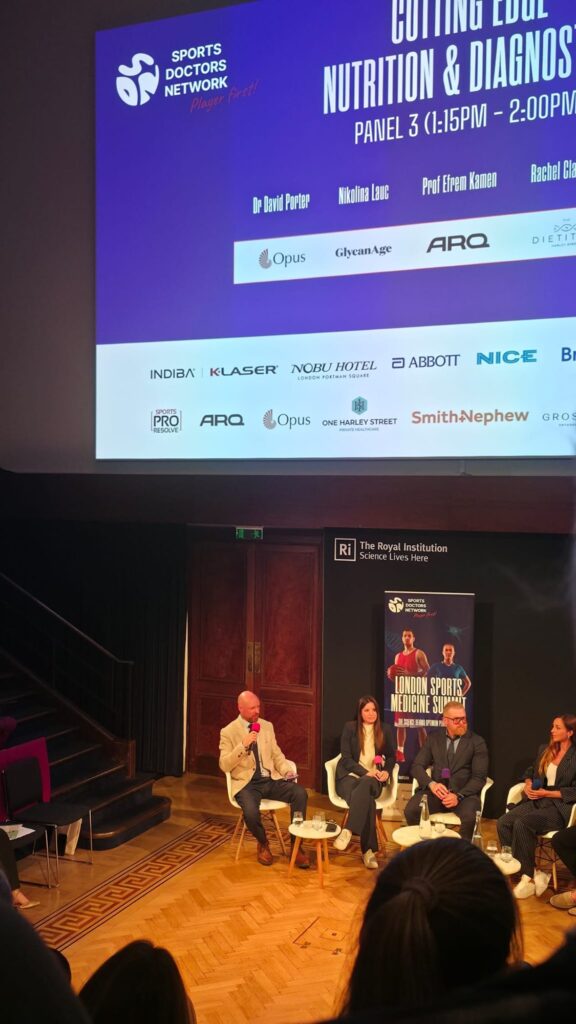
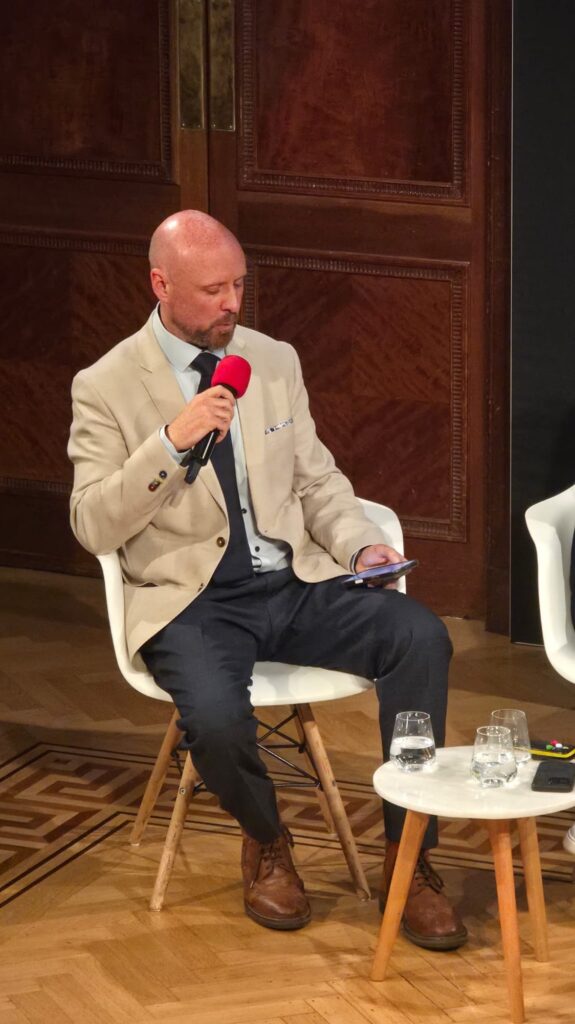
Peptides are something patients ask me about regularly, so it was useful to hear them tested properly. In my view the evidence base is uneven. For many of the products marketed to active people, the human trial data is thin. Athletes in tested sport also need to know that a number of peptides appear on the World Anti-Doping Agency’s prohibited list. As with every test or treatment discussed on the panel, the sensible starting point is a specific question that the result could actually answer.
A test earns its place only if the result would change what we do next.
Dr David Porter, Founding Director
What this means if you’re not a professional athlete
Most of the people we see in clinic don’t play for a living. They run marathons, play five-a-side, ride, row or simply want to stay active as they get older. The principles from Friday apply to them just as much. A smartwatch sleep score, a direct-to-consumer blood test or a supplement recommended online deserve the same questions an elite club doctor would ask. What is this measuring? How reliable is it? Would the answer change anything I do?
- Ask what a test would change. Before booking a blood panel or buying a monitoring device, write down the decision the result would inform. If there isn’t one, you probably don’t need the test.
- Use wearables as a prompt, not a verdict. A run of poor sleep or recovery scores is a reason to look at training load, stress and routine, not a diagnosis in itself.
- Judge readiness on more than how you feel. After an injury, feeling better comes before being ready. Strength, range, sport-specific movement and confidence should all be back before you return to full training or competition.
Dr David Porter
Dr David Porter is Founding Director of Opus Biological. He spent ten years at Chelsea FC, including as Men’s First Team Doctor, and continues to work with the FA, UEFA and FIFA. He moderated the nutrition and diagnostics panel at the 2026 London Sports Medicine Summit.
Want a clear view of what your body actually needs? Book a sports medicine consultation in Marylebone for an assessment built around evidence, not guesswork.
Book a consultation →