Persistent pain Archives - Opus Biological
Role of Physiotherapy in Fibromyalgia

Role of Physiotherapy in Fibromyalgia

Fibromyalgia (FM) is a chronic condition which causes pain throughout the body. Other symptoms include fatigue, poor sleep quality, anxiety and depression (Antunes and Marques, 2022). The cause of chronic pain in patients with FM is associated with the hypersensitivity of the central nervous system resulting in hyperalgesia and potentially allodynia. The symptoms of fatigue and exhaustion can be explained by the hyporesponsiveness of the hypothalamus-pituitary- adrenal mechanisms in patients with FM (Mengshoel, 2013). Recently, more research is being conducted into the role of physiotherapy in FM and has shown to reduce pain, improve quality of life and function.

Exercise has been shown to improve psychological well-being and a reduction in pain, fatigue and other comorbidities (which is common in patients with FM). The combination of exercise and pain education have been proven to be the most effective intervention for FM (Mengshoel,2013) and also reduce medication consumption. Interestingly, addressing central sensitization and the neuroscience of pain in-person with patients has been shown to be the most successful form of pain education when improving compliance with exercise. However, there is insufficient data on what type of exercises is the most effective (Antunes and Marques, 2022).

Hydrotherapy and land exercise has been shown to be equally effective, although being immersed in water can have an analgesia effect. The heat and the increase of buoyancy causes the release of endorphins, increased capillarization and oxygen consumption. Moderate to high intensity resistance training has shown to reduce fear avoidance and improve neuromuscular ability which is especially important for menopausal and postmenopausal women. However, research demonstrates aerobic exercise to be more tolerated by patients (Antunes and Marques, 2022).

Physiotherapists regularly use massage and manual therapy for pain relief in patients with FM. Unfortunately, there are only a few studies addressing the effects of massage in FM (Antunes and Marques, 2022). Other modalities, such as TENS, have been proven to be effective in modifying pain and in turn an increased activity levels for patients with FM (Mengshoel, 2009).

There is conflicting evidence on the optimum treatment for patients with FM, however it is important to incorporate a multi-faceted approach that addresses the patients’ needs and goals.

Antunes, Mateus Dias, and Amélia Pasqual Marques. “The Role of Physiotherapy in Fibromyalgia: Current and Future Perspectives.” Frontiers in Physiology, vol. 13, no. 13, 16 Aug. 2022, p. 968292, www.ncbi.nlm.nih.gov/pmc/articles/PMC9424756/, https://doi.org/10.3389/fphys.2022.968292.

Mengshoel, Anne Marit. “Physiotherapy and Fibromyalgia: A Literature Review.” Advances in Physiotherapy, vol. 1, no. 2, Jan. 1999, pp. 73–82, https://doi.org/10.1080/140381999443456. Accessed 10 Dec. 2020.

—. “Physiotherapy Management of Fibromyalgia: What Do We Know and How May This Affect Clinical Practice?” Physical Therapy Reviews, vol. 5, no. 2, June 2000, pp. 85–91, https://doi.org/10.1179/ptr.2000.5.2.85. Accessed 17 Nov. 2020.

Illustration of a man performing a lunge in a living room

Why Pain is so painful

Why Pain is so painful

Pain. It’s the most common issue we hear in the clinic, and everyone’s experienced it at some point – whether it’s a stubbed toe, a banging headache, or a twisted knee. But what is pain, really? Is it simply a physical reaction to injury, or is there something more going on? The International Association for the Study of Pain defines pain as “an unpleasant sensory and emotional experience associated with actual or potential tissue damage” (Wiech, 2016). The words “sensory” and “emotional” tell us that pain is more than just damage to our body; it’s heavily influenced by what we focus on, expect, remember, and feel. In fact, research confirms that these psychological and social factors play a huge role in how intense pain feels (Atlas & Wager, 2018). Consider this example: imagine a man walking his dog in the Australian Outback. He feels a small prick on his leg, then looks down to see he’s been bitten by a snake. His body reacts with a rush of burning pain, just as he’d expected. He receives treatment, recovers, and gets back to his routine. Two years later, while hiking in a similar setting, he feels a prick in his leg again. He immediately recalls that painful memory and responds with the same intensity of pain – only to find out it’s nothing but a thorn.
So, what’s really happening here? Here’s how our mind shapes pain:
  • Attention: Focusing too much on a painful area tends to make it feel worse. When we concentrate on pain, our brain gives it more significance, which increases perceived intensity (Sharpe et al., 2020; Wiech, 2016).

  • Expectations: What we expect to feel can also make pain better or worse. Research has shown that expecting pain to be severe makes us experience it that way. On the flip side, positive expectations can actually lessen the pain we feel (Atlas & Wager, 2018).

  • Past Experiences: Pain memories are powerful. When we experience pain, our brain stores it, priming us to react strongly in similar situations. This response may have evolutionary roots, helping us avoid harm, but it also means our past pain experiences can amplify new, less serious ones (Tracey & Mantyh, 2017).

  • Emotional State: Emotions like anxiety and fear can trigger a more intense pain experience. Negative feelings amplify our pain responses, while more neutral or positive mindsets tend to reduce them (Thompson et al., 2018; Wiech, 2016).
Pain, then, is more than a physical sensation. Our expectations, focus, memories, and emotions each shape how we experience it, giving us some insight into how to manage it effectively.

Reference List


  • Atlas, L.Y., & Wager, T.D. (2018). How expectations shape pain. Neuroscience Letters, 693, 24–31.
  • Sharpe, L., Jones, E., Ashton-James, C., et al. (2020). Attention and pain: mechanisms and clinical implications. Journal of Pain, 21(3–4), 233–244.
  • Thompson, K.A., Tran, B., & Geaghan-Breiner, C. (2018). Biopsychosocial factors influencing pain perception. Pain Medicine, 19(6), 1107–1115.
  • Tracey, I., & Mantyh, P.W. (2017). The cerebral signature for pain perception and its modulation. Neuron, 55(3), 377–391.
  • Wiech, K. (2016). Deconstructing the sensation of pain: The influence of cognitive and emotional factors. Nature Reviews Neuroscience, 17(2), 83–92.
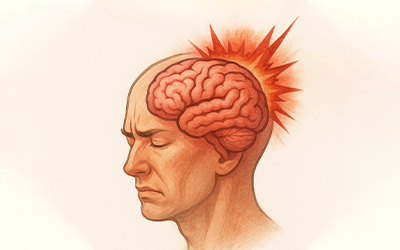
Anatomical illustration of a head showing the brain and pain
Biopsychosocial Considerations of Sports Injury and Rehabilitation: A Holistic Approach to Athlete Recovery

Biopsychosocial Considerations of Sports Injury and Rehabilitation: A Holistic Approach to Athlete Recovery

Opus, founded by David Porter, a new perspective on sports injury rehabilitation is taking shape. Together with Professor of psychology Dave Collins and lead physiotherapist Ian Gilham, the team promotes the biopsychosocial (BPS) model—a comprehensive approach that goes beyond treating the physical injury to address the mental and social factors that impact an athlete’s recovery.

This method aims to support athletes fully, enabling them to return to peak performance with resilience.


Key Points:

  • Interdisciplinary Teamwork: The BPS model draws on a team of specialists, including doctors, physiotherapists, psychologists, nutritionists, and coaches. This interdisciplinary approach ensures that all aspects of an athlete’s recovery are covered, promoting a more rounded and complete rehabilitation.
  • The Biopsychosocial Model: Traditionally, rehabilitation focuses on the physical aspects of injury. However, the BPS model acknowledges that injuries affect athletes in other ways too, such as their mental health (e.g., anxiety or loss of identity) and social status (e.g., their role within the team). The model addresses these factors together for a holistic recovery.

  • Patient-Centred Care: One of the core principles of the BPS model is putting the athlete at the centre of their care. This patient-centred approach ensures that athletes are actively involved in their recovery process, which can increase motivation and help tailor the rehabilitation to their specific needs.

  • Real-Life Examples: The article shares practical case studies where the BPS model has been effectively applied. In one case, a competitive equestrian rider with a severe pelvic injury received coordinated care involving medical, psychological, and social support, which helped her overcome fears about returning to competition.

  • Rehabilitation Stages: Recovery under the BPS model follows a clear, structured path, with each phase of rehabilitation managed by the interdisciplinary team. Early stages focus on reassurance and stabilisation, while later stages incorporate goal-setting to keep the athlete motivated and engaged.

  • Social Support: The social aspect of recovery is vital for maintaining mental wellbeing. The BPS model encourages athletes to remain connected with their teams during rehabilitation, helping them feel included and supported throughout the process.

  • Goal Setting and Progress Measurement: Setting clear, achievable goals is central to the BPS model. Breaking the rehabilitation process into manageable steps allows athletes to see progress and stay motivated. Tools like the “Challenge Ladder” help measure this progress, giving athletes a clear path forward.

  • Addressing Psychological Barriers: Injuries often bring psychological challenges, such as fear of reinjury. The BPS model incorporates psychological support to address these fears early on, helping athletes regain their confidence and return to competition without hesitation.

  • Clear Roles for Specialists: With many professionals involved, clear communication is essential. The BPS model establishes well-defined roles for each specialist, doctors, physiotherapists, and coaches, ensuring consistency in care and avoiding confusion for the athlete.

  • A Look to the Future: The authors advocate for broader adoption of the BPS model across sports rehabilitation settings, noting that its holistic approach leads to more effective and complete recovery. This model is particularly beneficial in helping athletes not only return to play but come back stronger, both physically and mentally.

In this article, David Porter, Dave Collins, and Ian Gilham highlight the benefits of the biopsychosocial approach to sports injury rehabilitation.

Focusing on the athlete’s physical, mental, and social well-being, the BPS model provides a more complete path to recovery. Through interdisciplinary collaboration and patient-centred care, this approach ensures that athletes return to their sport stronger and more resilient.

This innovative approach is setting a new standard in sports medicine, helping athletes achieve the best outcomes in their recovery journey. To learn more about how the BPS model can enhance sports injury rehabilitation, read the full article here


The power of words!

The power of words!

Something I always try to personally remind myself when seeing a patient, is how important the use of my language and terminology is in providing them a safe, informative and hopefully, comfortable environment. I think it is fair to say that a large percentage of patient’s withhold some level of apprehension when attending a medical appointment, particularly that first meeting. For me, that first time with a patient is as much about building a strong and trustworthy relationship as it is providing a treatment plan or diagnosis. I am sure each and every medical professional has had those appointments where the time is up and nothing ‘objective’ or ‘physical’ has taken place. Instead, the time has been taken up by conversation, or possibly even one way conversation where the professional’s role has simply been to listen rather than talk. For me, this is still active treatment and often, very beneficial to the patient. On more than one occasion I have been glad to receive an email or contact from a patient with whom this has been the case, where they have simply said ‘thank you’ for giving them the time to tell their story and share their beliefs.

An interesting stat that I have always remembered is that 40-80% of medical information provided by healthcare practitioners is forgotten immediately. The greater the amount of information presented, the lower the proportion correctly recalled and furthermore, almost half of the information that is remembered is incorrect (Kessels 2003)(3). This amplifies the importance of trying to keep terminology simple and keep focus on the most relevant information for that patient. From personal experience, it is more often than not, also the negative information or language used by a health professional that the patient clings to and remembers. Linskins et. al (2023) (2) carried out a randomised control trial on the effects of negative language use of physiotherapists in the treatment of lower back pain. To no surprise, the findings were that the use of negative language heightened a patient’s state of anxiety, with higher rates of belief and concerns that their condition would last for longer. This is not to say we should be unrealistic in what a patient’s possible prognosis may be, however it is definitely an indicator that how we relay that information is key in how they may perceive their recovery or long term management of a condition. I personally always like to ensure a patient leaves their appointment having completed something ‘pain free’ or that they didn’t believe they could actually do prior to that session. It gives a great base for positive reinforcement and the use of positive language, hopefully giving them something to work with and focus on going forwards.

Through my own career to date I have been lucky enough to work with some fantastic doctors and physiotherapists and it is from these, that I believe I have been able to do my best in attempting to maximise my interpersonal and communication skills when face to face with a patient. I was recently asked by a physiotherapy student, what key pieces of advice I would give for taking an effective subjective assessment. My response was based round the following points:

  • Let the patient lead the conversation
  • Do not interrupt the patient when they are speaking – no matter if the clock is ticking
  • Make eye contact with them, not constant eye contact with your computer screen
  • Emphasise you are here as a tool for them, not as a solution – give the patient some self importance and responsibility
  • Do not make the patient feel hurried
  • Use simple terminology
  • address the negatives, but focus on the positives

Franx and Murphy (2018) (1) summarise the importance of language in a medical setting nicely. They state that ‘listening consists of following the lead of language, often along many strange paths, until a proper understanding is reached. In this way, a patient’s true background is opened that is required for an effective intervention.’

Reference List


  • Franz, B. and Murphy, J.W. (2018). Reconsidering the role of language in medicine. Philosophy, Ethics, and Humanities in Medicine, 13(1). doi:https://doi.org/10.1186/s13010-018-0058-z.

  • Fieke) Linskens, F.G., van der Scheer, E.S., Stortenbeker, I., Das, E., Staal, J.B. and van Lankveld, W. (2023). Negative language use of the physiotherapist in low back pain education impacts anxiety and illness beliefs: A randomised controlled trial in healthy respondents. Patient Education and Counseling, 110, p.107649. doi:https://doi.org/10.1016/j.pec.2023.107649.

  • Kessels, R.P.C. (2003). Patients’ memory for medical information. Journal of the Royal Society of Medicine, [online] 96(5), pp.219–22. doi:https://doi.org/10.1258/jrsm.96.5.219.

Illustration of a runner surrounded by thought bubbles showing different sports